
 Benjamin Otu Effiwatt
You know the drill. Valentine’s Day equals roses, chocolates, love notes, and promises. Boxes of candy vow to “love you forever.” Jewelry is purchased as a symbol of devotion. Everyone acts crazy in love…right?It’s easy to feel pressure when you’re wishing your relationship were filled with more romance. Days full of warm gestures and intense emotions leave many of us feeling like our relationships don’t quite measure up.
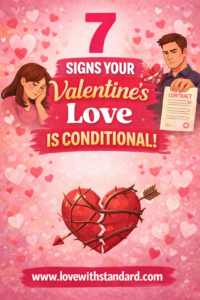
The truth is, some love is conditional. Many people spend years dating or married to partners who only offer affection when expectations are met.Learning how to spot the 7 Signs Your Valentine’s Love Is Conditional can help you clearly see what’s working in your relationship—and what may be quietly draining you.

What Does Conditional Love Mean?
Conditional love means someone only offers love when certain conditions are met.
Those conditions may include your behavior, your performance in the relationship, your appearance, or your willingness to submit to their needs. When you meet their standards, they are generous with love. When you fall short, love is withdrawn and replaced with criticism, distance, or punishment.
In healthy relationships, arguments and disappointment don’t revoke love. There may be boundaries, consequences, and difficult conversations—but the relationship remains secure. With conditional love, you learn that love must be earned repeatedly.
Sometimes conditional love is easy to spot. Other times, it creeps into a relationship so slowly that you don’t realize it until you’re already feeling unsafe.
Why Conditional Love Can Be So Hard to Spot
Conditional love can be incredibly confusing because it often exists alongside genuine affection. One day your partner is kind, generous, loving, and thoughtful. The next day, they push you away because you disappointed them.
If this sounds familiar, you may find yourself thinking:
-
“They’re just being distant because they’re upset with me.”
-
“If I’m extra good, helpful, or quiet, things will go back to normal.”
-
“They love me—I just need to try harder.”
This push-and-pull dynamic keeps many people stuck in unhealthy relationships far longer than they ever intended.
Now let’s look closely at the 7 Signs Your Valentine’s Love Is Conditional.
1. Love and Affection Are Withdrawn as Punishment
When you disagree with your partner or upset them, do they go silent? Withdraw affection? Become emotionally cold?
This might look like:
-
Ignoring you
-
Refusing physical affection
-
Pulling away without explanation
-
Acting angry when you’re simply trying to resolve the issue
In these moments, your partner is punishing you by withholding love.
The underlying message is clear: You’re behaving badly. You don’t deserve my love until you fix yourself.
Over time, this teaches you to avoid conflict at all costs. You learn that your needs and feelings don’t matter and that you don’t deserve care when you’re hurt.
2. You Only Feel Loved When You’re “Behaving”
Have you noticed that everything feels perfect and loving until you disagree with your partner—then suddenly you’re walking on eggshells?
When you follow their rules and keep them happy, love feels strong and secure. But the moment you:
-
Push back
-
Offer a different opinion
-
Set a boundary
-
Make the relationship about your needs
…the atmosphere shifts.
You may feel guilty, anxious, or pressured to change your behavior just to restore peace.
This dynamic breeds codependency. You begin monitoring your words and actions constantly to stay in your partner’s good graces.

3. Your Partner Keeps Score
Another red flag is scorekeeping. Does your partner keep mental tabs on everything they’ve done for you—and then bring it up during conflict?
Statements like:
-
“You never do anything for me.”
-
“I wouldn’t have done that if you weren’t so selfish.”
-
“After everything I’ve done for you…”
Translation: I gave you love, time, or effort—now you owe me.
Healthy relationships don’t operate on a tit-for-tat system. Love is meant to be generous, not transactional.
4. Your Worth Depends on What You Provide
In conditional relationships, partners often value what you do more than who you are.
Do you feel loved primarily because of your:
-
Appearance
-
Income or status
-
Emotional labor
-
Household contributions
If any of these change—weight gain, job loss, illness, or simply doing less—you may sense disappointment or emotional distance from your partner.
This is damaging because it teaches you that your value lies in productivity. You begin to believe that if you stop giving or performing, you’ll lose love.
5. Apologies Are Expected, but Grace Is Rare
Do you feel like you’re always apologizing just to keep the peace? And when you do apologize, does it never feel like enough?
Your partner may:
-
Bring up past mistakes repeatedly
-
Refuse to truly forgive
-
Use your errors to justify ongoing punishment
In this dynamic, conflict becomes a tool for control instead of an opportunity for growth.
6. You Feel Anxious About Losing Them
Conditional love creates constant emotional anxiety. You may worry that one wrong move will cost you the relationship.
This often shows up as:
-
Replaying conversations in your head
-
Being afraid to speak honestly
-
Constantly seeking reassurance
-
Feeling responsible for your partner’s moods
Love begins to feel like something you must maintain by staying on your “best behavior” at all times.

7. Your Emotional Needs Are Considered “Too Much”
Do you feel embarrassed or ashamed for needing support? Like your feelings are inconvenient or exaggerated?
Your partner may:
-
Dismiss your emotions
-
Call you “too sensitive”
-
Accuse you of being needy
-
Respond with irritation instead of care
In conditional relationships, your needs are only acceptable if they don’t inconvenience your partner.
How Conditional Love Hurts You Over Time
Staying in a relationship where love is conditional takes an emotional toll.
Over time, you may experience:
-
Chronic self-doubt
-
Emotional numbness
-
Loss of identity
-
Fear of abandonment
You may even become afraid to love again, constantly bracing for rejection the moment you feel accepted.
Recognizing the 7 Signs Your Valentine’s Love Is Conditional helps you distinguish unhealthy patterns from normal relationship struggles.
Is Conditional Love Always Intentional?
Not always. Conditional patterns are often learned in childhood. If love was inconsistent or earned growing up, someone may repeat those patterns unconsciously in adult relationships.
However, unintentional harm is still harm. A relationship can be unhealthy even if no one means to hurt the other.

What Healthy Love Should Feel Like
Healthy relationships still have boundaries and expectations—but love does not disappear during conflict.
Healthy love looks like:
-
Arguments that don’t threaten the relationship
-
Love that isn’t used as leverage
-
Emotional safety for both partners
-
Accountability paired with empathy
-
Freedom to express needs without fear
If you recognized several of the 7 Signs Your Valentine’s Love Is Conditional, pause before reacting. Reflect honestly on how the relationship makes you feel.
Ask yourself:
-
Do I feel safe being my true self?
-
Am I loved for who I am or what I provide?
-
Has my anxiety increased or decreased since being with them?
Awareness is powerful. Understanding what you deserve can help you stop blaming yourself for being loved conditionally.
Tips If You’ve Experienced Conditional Love
Consider:
-
Talking openly with your partner
-
Setting firmer emotional boundaries
-
Seeking couples counseling
-
Leaning on trusted friends or family
Conclusion
Love should never feel like a prize you earn by suppressing your discomfort or pretending everything is fine.
People who love you unconditionally will accept you when you’re tired, upset, and imperfect.
Valentine’s Day is a beautiful opportunity to reflect. Gifts and romance are wonderful—but real love is knowing you can be your full, messy self and still be deeply loved.
Save pin for later

- 10 Self-Care Tips Every Woman Needs After a Toxic Relationship - March 11, 2026
- Top 10 Marriage Quotes - March 11, 2026
- 7 Reasons You Keep Going Back to Toxic Partners - March 11, 2026